


Not every injured worker in Nevada receives vocational rehabilitation. It is aimed at a specific situation, and understanding that situation tells you quickly whether it applies to you.
The basic picture
Vocational rehabilitation is generally for a worker who has an accepted workers' compensation claim, has been left with permanent restrictions by a physician, and because of those restrictions cannot return to the job they were doing when they were injured. Eligibility is governed by NRS 616C.590.
If your restrictions still allow you to do your old job, or your employer can modify it so that you can, that is the preferred outcome under Nevada law and vocational rehabilitation in the retraining sense usually does not follow.
The three questions
- Are your restrictions permanent? Temporary restrictions while you are still healing are a different stage of the claim.
- Do the restrictions actually prevent your old job? This is measured against what your job really required, which sometimes differs from the job description.
- Is there another route back to comparable work? Nevada looks first at your same employer and your existing skills before it looks at retraining.
What the written assessment does
The written vocational assessment required by NRS 616C.550 is the document that answers those questions on the record. A counselor interviews you, verifies your work history and education, compares your aptitudes and skills against your restrictions, and states an eligibility determination.
It matters that this document is accurate, because a great deal follows from it. If it describes your old job wrongly, or misses a language barrier, or overstates what you can lift, say so.
Common misunderstandings
"I have a rating, so I get retraining." A permanent partial disability rating and vocational rehabilitation eligibility are related but not the same thing.
"My employer said there's no work, so I qualify." Possibly, but the assessment has to establish it rather than accept it.
"I've been doing this job twenty years, I have no other skills." Very often untrue. Twenty years of back-of-house work in a Las Vegas resort builds scheduling, inventory, safety, equipment and supervisory skills that transfer further than people expect. A proper transferable skills analysis finds them.
General information about Nevada workers' compensation, not legal advice. For advice about your own claim, speak with an attorney.
Questions about your own claim? Call us. We answer in English and Spanish.
Keep reading
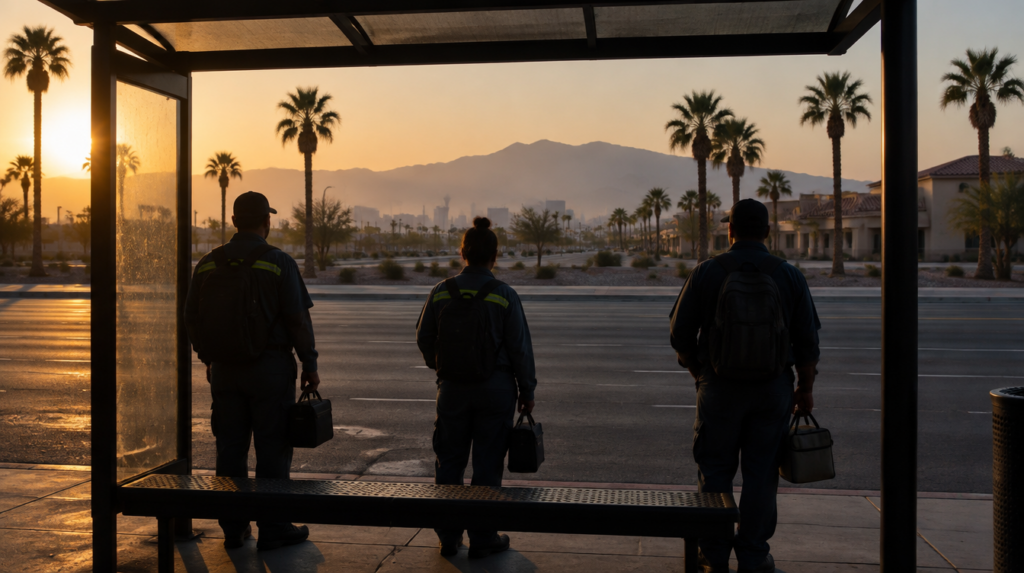 For injured workersHurt at Work in Las Vegas: What Happens NextA plain-language walk through the Nevada workers' compensation process, from the injury to the point where vocational rehabilitation enters the picture.Read → 7 min
 For injured workersWhat Happens at Your Vocational AssessmentWhat the meeting is, what to bring, what you will be asked, and how to make sure the document that comes out of it is accurate.Read → 5 min
 For injured workersRetraining or a Lump Sum? How to Think About the ChoiceNevada lets you take money instead of a program. Here is what you are actually trading.Read → 6 min